Your child is irreplaceable. Everything else you have can be replaced.
And right now, that child is somewhere with a phone in their bag.
School. The taxi. A friend's place. Sports practice. For most of the day, that phone is somewhere you aren't — running on mobile data you pay for, doing things you don't see.
Most days that's fine. Some days it isn't. The hard part is you only find out which kind of day it was after.
Three things parents quietly worry about, in that exact gap. They deserve to be named honestly.
1. Can she actually reach you when she needs to?
You gave her the phone for emergencies. That was the whole point.
But you don't actually know, right now, whether her airtime is enough to call you. You only know when she tries.
And of course she has Wi-Fi at home. She has Wi-Fi at school. She has friends with phones. The whole point of giving her a phone was to widen her world a little, not to keep a tighter grip on it.
That argument deserves to be taken seriously. Helicopter parenting genuinely damages children — and it damages the parent too. The slow erosion of trust that comes from constant monitoring is real, and it's expensive in ways you only notice years later.
So if the question were whether to read her messages, or track her location, the answer would be no. Easily no.
But that isn't the question. The question is whether she has enough credit to call you when she has to.
And knowing the answer to that question isn't surveillance. It's closer to knowing there's petrol in the car before she drives away. Nobody calls that controlling. It's the basic functional check that makes the rest of the freedom work.
Independence and capability aren't the same thing. You can give her one and still make sure she has the other.
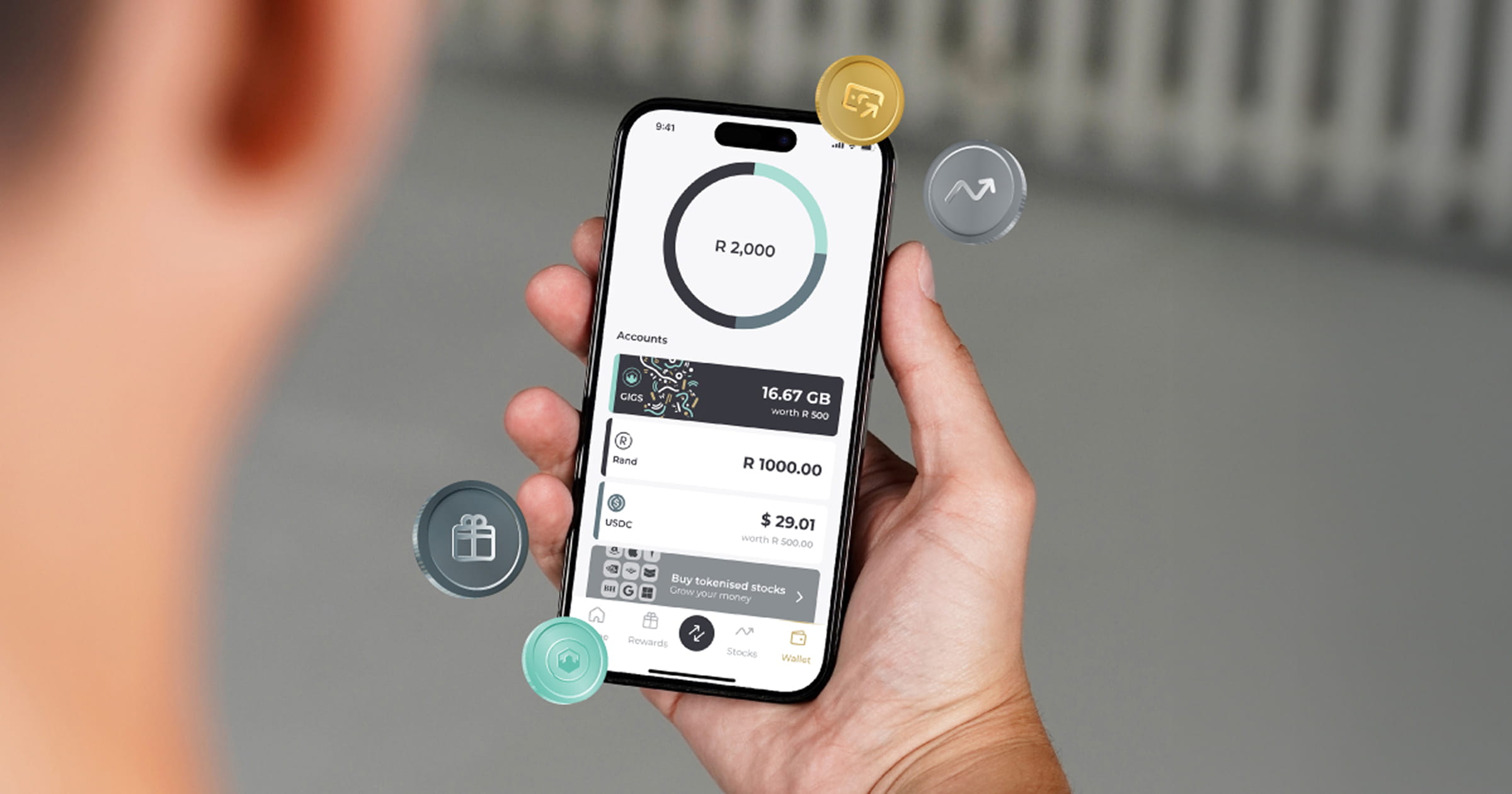
You add her number to your Kastelo account. You see her balance, in real time, from your own phone. If it's low, you top her up — without making it a thing. She doesn't even need to know you checked.
It isn't about watching her. It's about making sure that when she actually needs you, the call goes through. Add her number →
2. His data is gone. Again.
It happens faster than you think.
One long YouTube video on the way home from school. A friend sends a link. The autoplay queue runs in the background.
Or he's at a friend's house with no Wi-Fi, and his phone updates an app on its own — Snapchat, a game, anything — and the bundle you topped up two days ago is finished.
He hands you the phone with the empty-data icon and shrugs. He genuinely doesn't know where it went.
You're not really upset about R200. You're upset because you don't know where it went, you can't see what he's spending it on, and you're paying the bill regardless. It feels like quietly subsidising something you didn't agree to.
Now, there's a real argument that kids should learn to manage their own resources. That capping his data robs him of the lesson. Let him run out. Let him be bored for a week with no TikTok. He'll figure it out.
That argument is mostly correct. Children learn the value of a thing by feeling its cost. The parent who softens every consequence raises a young adult who can't function. The principle stands.
But there's a hole in the principle as it applies here. For natural consequences to do their teaching, the consequence has to land on him. Not on you.
Right now, when his data runs out, he hands you the phone and the consequence is two hundred rand off your account. You aren't the natural consequence. You're the workaround.
Until that changes, no learning is happening — only a kind of quiet rent extraction you're paying to keep the peace.
Run the numbers on a typical month: top up R200 on Sunday, finished by Wednesday, R150 again Wednesday, finished by Friday. R600 in a month. Roughly seven thousand rand a year — flowing through to a child who genuinely doesn't know where it went.
The Kastelo lever is small but specific. From your app, you switch his number to calls only — no mobile data — for as long as you decide. Flip it back when you want.
The teaching opportunity is the conversation that follows. "You burned a month's data in five days. Until next month, calls only." That's a consequence. The lever just makes it possible to enforce one without becoming an ATM. Add his number →
3. What is he being shown online?
On any phone with the open internet, pornography is two taps away. Graphic violence is two taps away.
And it isn't only those two. It's also whatever a friend shares in a group chat. An autoplay queue that drifts somewhere you didn't expect. A recommendation engine that doesn't know how old he is and doesn't care.
Some of what's on the other side of one tap is content you would never let into your house. Once a child sees it, he carries it. That's not a marketing claim. That's developmental psychology.
And the standard response to all of this is that kids will find what they want to find. Block too much and they'll borrow a friend's phone. Block too little and you're naive. Either way, the argument goes, you can only delay the inevitable while damaging the relationship.
There's truth in that. Determined kids work around restrictions; they always have. And the relationship matters more than any filter — what actually protects a child long-term is a parent they can talk to about hard things. Nothing on this page replaces that.
But pay attention to what "you can only delay the inevitable" is quietly assuming. It's assuming that delay has no value of its own.
That argument falls apart the moment you apply it to almost anything else. Delaying when a child first sees graphic violence is not the same as failing to prevent it forever.
A six-year-old is not an eleven-year-old is not a fifteen-year-old. Each year you push that exposure later is a year their developing brain gets to grow without it.
That isn't paranoia. That's more or less the entire premise of childhood.
You can't filter the world. You can keep one of its loudest pipes off until he's ready for it.
With Kastelo GIGS, you limit his mobile data to specific apps. For a younger child, that often means WhatsApp only. He can chat with friends. He can send voice notes. He can call you.
What he can't do, on the number you control, is open the open internet.
This won't solve everything. Wi-Fi at home still exists. Friends still have phones. But this is one of the biggest pipes — the one that follows him out of the house — and you can take it off the table for now.
That isn't being controlling. That's choosing where to put your finite parental attention. There's only ever a finite amount of it. Add his number →
Why we built this
Most South African mobile networks weren't designed with parents in mind. They were designed to sell data bundles. The faster you burn through one, the better the year goes for them. Nothing about that machine is built to slow it down — that's not how the incentives line up.
We don't think a network should treat your child's phone like a slot machine. We think it should give you, the parent, the same view of that phone you have of the rest of your life. Visibility. Control. Real numbers, in real time.
That's why GIGS exists. So you can see, decide, and act — without changing plans, signing contracts, or fighting with a call centre.
If you're new to us: Kastelo is a South African company operating since 2020. Our mobile network runs on MTN's infrastructure. Our financial side is FSCA-licensed (FSP #51074). You can read more at Our Story.
Three worries. One simple plan.
Each worry has its own answer, but the answers all run through one place: your Kastelo app, with your child's number added to your account.
- Add their number in five minutes. Open your Kastelo app. Tap Add SIM. Choose eSIM (instant — they scan a QR code) or physical SIM (delivered to your door, or pick it up free at any Pargo point inside Clicks). R69 once-off. No contract.
- Choose what their number can do. Calls only. WhatsApp only. Or full data. Change it any time, from your phone. The change takes effect within seconds.
- See and top up their balance — and the credit you load doesn't expire. Kastelo prepaid credit doesn't lapse on a 30-day clock. The R100 you topped up this month is still there next month if your child didn't use it. Over a year that meaningfully changes how often you actually need to top up.
That's the whole thing. No contract. No separate app for each kid. No parental-controls subscription on top of the network bill. One account, one dashboard, one set of decisions you actually get to make.
And if you get stuck at any point, you message us on WhatsApp. +27 68 900 0202. Real humans, who actually answer — not a call centre that opens a ticket and forgets about you.
What success actually looks like
- You stop topping up every Friday.
- You know — before she calls — that she has airtime.
- He has WhatsApp. He doesn't have the open internet on a phone in his pocket.
- Your kids feel structure, not chaos.
- You sleep a little better. You have time and energy left for the parts of parenting that matter most.
None of this turns you into a different parent. It just brings a little order to a place that was getting chaotic.
And if you don't?
Nothing dramatic. Just the slow accumulation.
Another R200 next week. Another evening you don't ask what he was watching because you're tired. Another quiet wonder about whether she has airtime.
None of those are catastrophes on their own. They're just leaks. And leaks compound — quietly, year after year.
The question isn't whether the leaks are big. The question is whether you'd rather know.
A few honest objections
"This sounds intrusive." You're not reading messages, listening to calls, or tracking location. You're seeing a balance and setting permissions on a phone you pay for. The most invasive thing here is exactly the same as the most invasive thing about the prepaid voucher you bought him last month — except you can see it instead of guess.
"My kid is responsible." Probably. The lever doesn't say otherwise. A responsible kid is one who comes to you and says "can I have full data this month, I need it for the project," and you flip the switch. The lever just gives both of you something concrete to talk about.
"He'll just use Wi-Fi at home." Yes. Most of what worries you doesn't happen at home anyway. It happens on the phone he carries with him.
"Isn't this controlling?" Knowing the petrol is in the car isn't controlling. It's how you keep the car — and her — running.
"What if I need help?" You message us on WhatsApp. We answer. Not a phone tree. Not a 48-hour ticket queue. An actual person, on the other end of the same chat app you already use every day.
"It's easier to leave things as they are." Easier today, yes. The cost compounds quietly.
The decision
Here is the decision in front of you, plainly.
Five minutes. R69. Free SIM pickup at any Pargo point inside Clicks. Two ways to sign up — both work.
The lowest-friction option: WhatsApp. Real person on the other end of the chat app you already use every day. We do the heavy lifting; you answer a few short questions. No app download, no setup screens, no call centre.
Or if you'd rather drive yourself, open the Kastelo app and tap Add SIM. Same five-minute flow.
Either way, you can have this set up before your kids are home from school today.
The decision isn't whether to parent more. You're already doing plenty. The decision is whether to put one of these three quiet worries down — today — or to wait until the next time it happens and wish you had.
Prefer to do it in the app? Open Kastelo and tap Add SIM →
Family GIGS setup — the actual checklist
Save this. Eight steps, start to finish.
- Open the Kastelo app, or sign up if you don't have it yet (eSIM activation is instant).
- Tap Add SIM.
- Choose eSIM (instant — they scan a QR code) or physical SIM (free pickup at any Pargo point inside Clicks, or delivered to your door).
- Pay R69 once-off. No contract.
- Activate: scan the QR code on your child's device (eSIM), or insert the SIM and restart (physical).
- Set permissions: calls only, WhatsApp only, or full data. Change any time, from your phone.
- Top up their first balance from your dashboard.
- Done. The credit you load doesn't expire on a 30-day clock.
If you get stuck on any step, message us on WhatsApp at +27 68 900 0202. We answer.